
Challenge
By the time engineering design began, the interior design had already been developed and approved. The positions of lighting, decorative features, ceilings and furniture had been determined, so the building services had to fit into the established architecture without changing the concept.
The client highlighted three requirements: absolute quiet, precise temperature control and full integration of the systems into the interior design.
Good building services in a private house should not draw attention to themselves. They are noticed precisely when they have been done badly.
Heating: comfortable surface temperatures
Underfloor heating formed the basis of the system. However, this alone was not enough to distribute heat more evenly, so wall heating was also installed.
This solution improves winter comfort: people sense not only the air temperature, but also the temperature of the surfaces around them. As a result, indoor conditions feel more stable and gentle.
VRF air conditioning without visible units
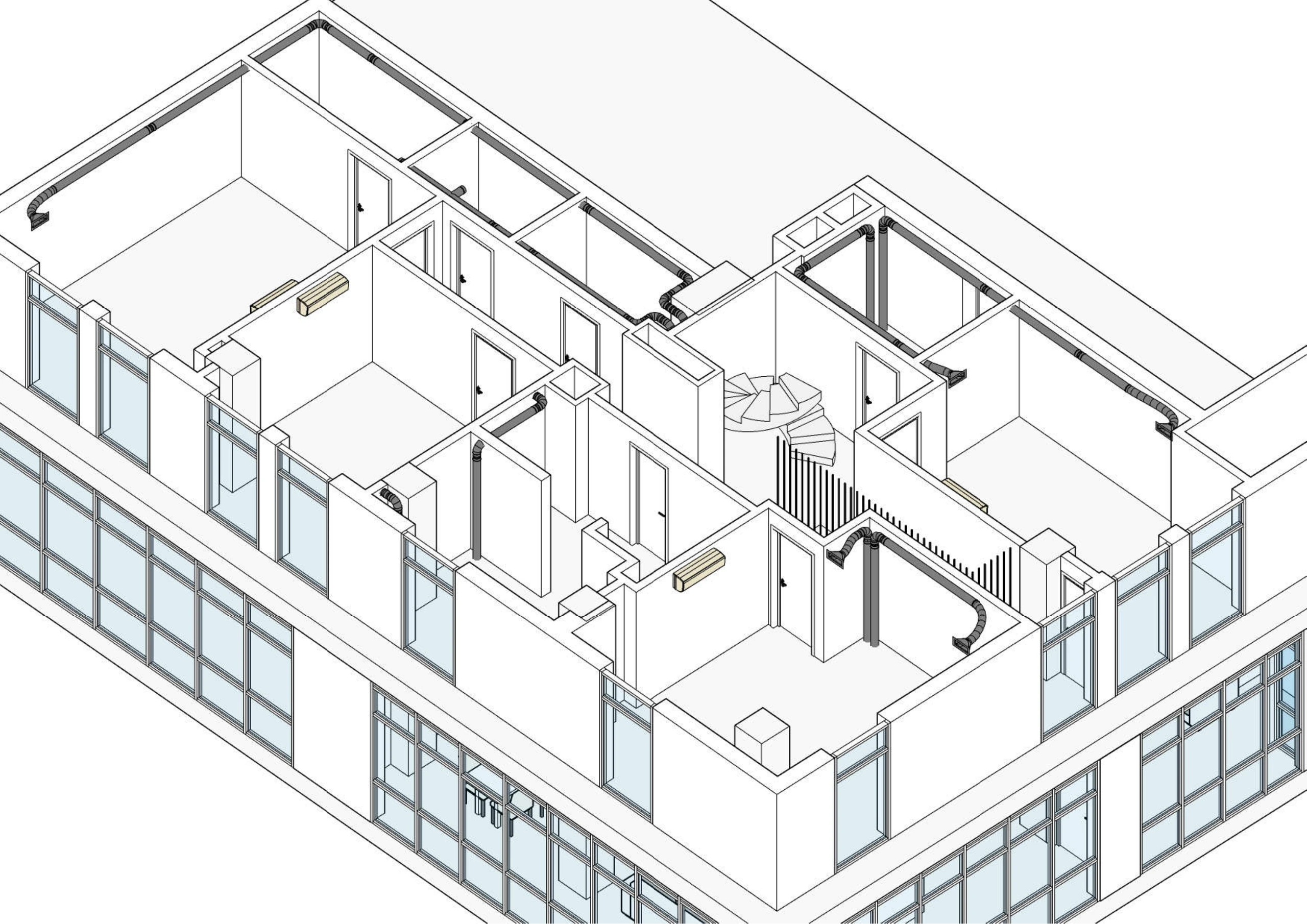
A ducted VRF system was used for air conditioning. Air is supplied through concealed slot diffusers integrated into the architecture of the rooms.
There are no visible wall-mounted units in the rooms, and the building services do not conflict with the interior design. The system functions as part of the house, rather than as equipment added after the fit-out.
Quiet operation as a dedicated engineering task
To achieve virtually silent operation, the ductwork was designed for minimal air velocities. This allowed aerodynamic noise to be eliminated at the design stage.
The slot diffuser plenum boxes were also lined with sound-absorbing materials. As a result, the system noise level is approximately 19 dB.
Low air velocities
The ductwork is designed to allow air to move without noise or turbulence.
Slot diffusers
The air supply is concealed within the room architecture and does not disrupt the interior.
Sound absorption
The diffuser plenum boxes are additionally treated with noise-reducing materials.
Approximately 19 dB
The system operates below the threshold of noticeable noise in most residential conditions.
Heat recovery ventilation
The house is equipped with supply and extract ventilation with heat recovery. It provides a continuous supply of fresh air, reduces heat loss and maintains consistent air exchange throughout the rooms.
The system is divided by floor, allowing more flexible control of operating modes according to how the house is used.
Automatic bathroom extract ventilation
In normal operation, bathroom extract ventilation runs at a reduced airflow rate to avoid unnecessary energy use and increased heat loss.
When sensors detect a rise in humidity, the system automatically switches to full capacity. Once readings return to normal, it automatically resumes standard operation.
Maintenance without access hatches
Equipment maintenance presented a separate challenge. The client did not want conventional access hatches in the ceiling, so access to the equipment was provided through removable air intake grilles.
These elements perform their primary function while also providing full maintenance access. The interior remains uncluttered, and the system remains fully serviceable.
Result
The house has an integrated set of building services that maintain a comfortable indoor climate while remaining virtually unnoticeable to its occupants.
The system provides precise temperature control, individual room control, fresh air with heat recovery, automatic humidity control and concealed maintenance access without compromising the interior design.
Comfort in a private home is made up of details that should not draw attention to themselves: temperature, quiet, fresh air and unobtrusive system operation.