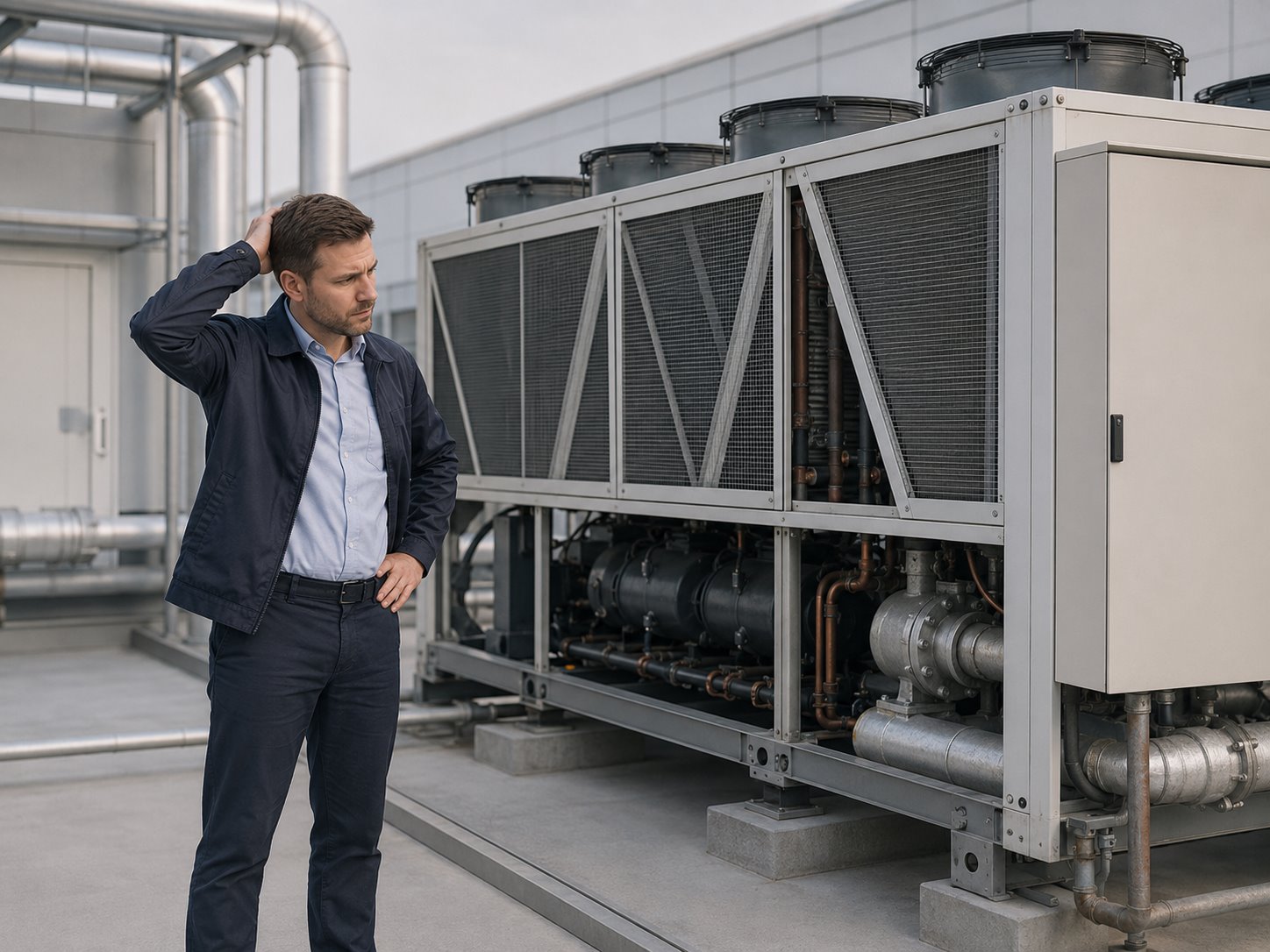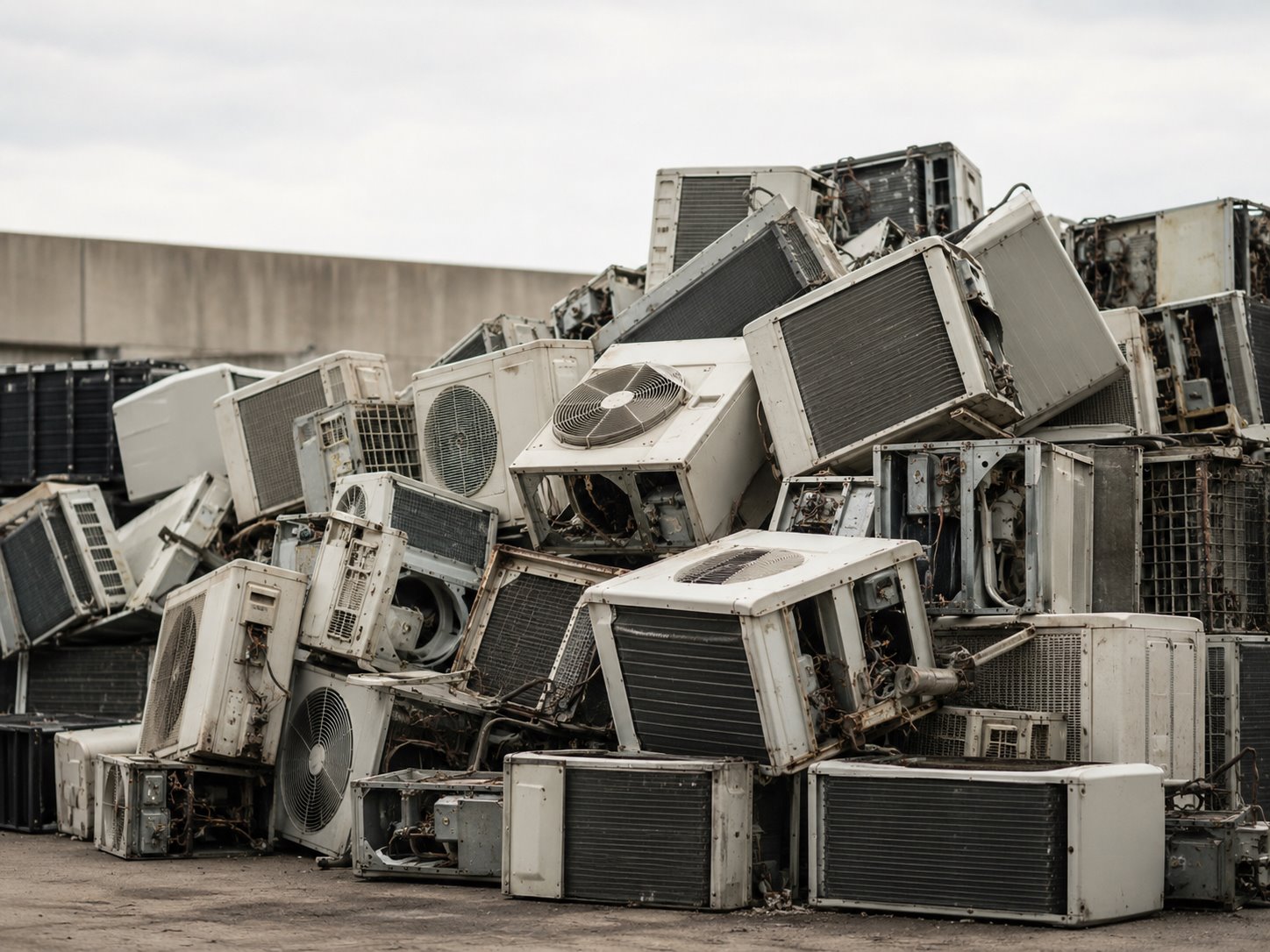
One pattern is particularly clear in chain businesses. The more sites there are, the more money is spent on facilities management. But that spending does not always bring order.
A chain of shops, pharmacies, restaurants or fitness clubs can spend millions every year on servicing, repairs, service requests, call-outs, emergency work, materials and contractors, yet still remain in firefighting mode.
The problem is often not that the company spends too little on facilities management. It is that it pays for reaction rather than control.
Firefighting becomes the norm
From the outside, everything in these companies appears to be functioning. There are contractors, service requests, invoices and work completion certificates. There are people constantly sorting things out.
But a closer look reveals a different picture. In spring, there is an urgent search for someone to service the air conditioners. In summer, complaints about the heat have to be addressed. After rain, drainage problems need tackling. Heating is remembered just before the cold weather arrives. Spare parts are sought after a breakdown.
And so it continues, year after year. Not as an exception, but as an operating model.
There is money, but no system
What is striking is that many chains spend enough on facilities management. Sometimes a great deal. But that money disappears into the chaos because each site operates in isolation.
- one contractor in one city
- a different approach in another
- some equipment is serviced regularly
- other equipment receives attention only after complaints
- repair histories are buried in correspondence
- spare parts are sought only when they are already needed
- decisions are made manually and under pressure
As a result, the company appears to have facilities management, but lacks infrastructure that is under control.
A chain is more than a collection of individual shops
One of the main mistakes is treating a chain as a collection of separate sites. An air conditioner breaks down in a shop, so it is repaired. A drain becomes blocked, so it is cleared. A temperature complaint comes in, so someone responds.
For one site, this approach may still work. For ten, it already causes stress. For a hundred, it starts costing serious money. For five hundred, it becomes an unmanageable flow of service requests.
Chaos within a chain scales faster than the chain itself.
Without common rules, standards, records, analytics and accountability, every new outlet adds more than revenue. It adds another future source of problems.
The most expensive repair is one that could have been avoided
In most chains, major breakdowns are not the main source of expenditure. Small, recurring problems handled without a systematic approach become the most expensive.
One site was not serviced on time. The wrong type of equipment was installed at another. At a third, no maintenance access was provided. At a fourth, a contractor changed the settings and nobody recorded it. At a fifth, the same problem has recurred for three consecutive seasons, but each time it appears in the system as a new service request.
When a company fails to recognise recurring problems, it pays each time as though the problem had occurred for the first time.
Facilities management needs a memory
Controlled facilities management does not begin with another service contract. It begins with the system’s memory. The company must know what is installed at each site, who services it, which problems recur, what decisions have already been made and how much they cost.
Without this memory, the chain is condemned to start from scratch every season.
- equipment register
- service request and repair history
- standardised procedures
- seasonal planning
- SLAs for contractors
- quality control of completed work
- critical spare parts stock
- analysis of recurring problems
This may not sound as impressive as new equipment. But it is often where the greatest savings can be found.
Mature companies manage risks, not breakdowns
The difference between chaotic and mature facilities management is very simple. In the first case, the company is constantly firefighting. In the second, it reduces the likelihood of problems arising.
A mature multi-site business does not just ask: who will attend the emergency? It asks different questions:
- why the failure occurred
- whether it has happened before
- whether the same problem exists at other sites
- how to change the standard to prevent it happening again
- which costs less: repairing, replacing or changing the approach
This is how facilities management stops being a cost centre and starts functioning as risk management.
The best facilities management looks boring
Good facilities management involves little drama. The director does not get calls about the air conditioning. The operations manager is not searching for a service provider at the height of the season. The owner does not learn about a problem only after customers have left negative reviews.
From the outside, it is almost invisible. But that very lack of visibility is a sign of quality.
The best facilities management is the kind that management thinks about during budget planning, not during an emergency.
The key question for a multi-site business
If your business doubled its number of sites tomorrow, what would happen to facilities management? Would it remain manageable? Or would you simply have twice as many service requests, emergencies, calls, manual decisions and unexpected costs?
This question matters far more than it seems. Because a multi-site business does not just scale its sales. It scales all its weaknesses too.
And if facilities management relies on individual heroics, phone calls and manual firefighting, sooner or later that model will be unable to cope as the business grows.
Sometimes the greatest savings do not begin with new equipment, a cheaper contractor or another tender.
They begin with the decision to stop managing breakdowns and start managing the system.