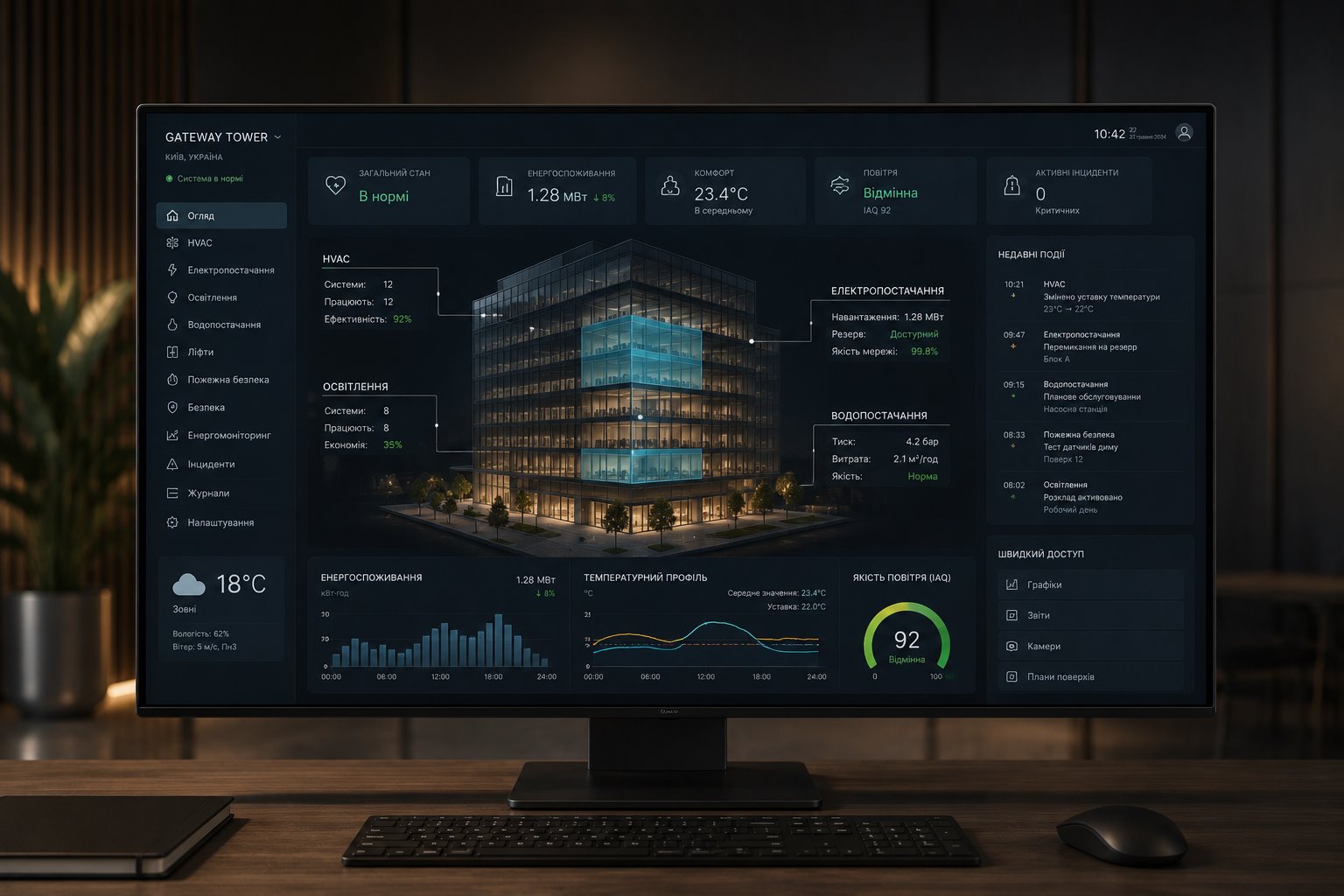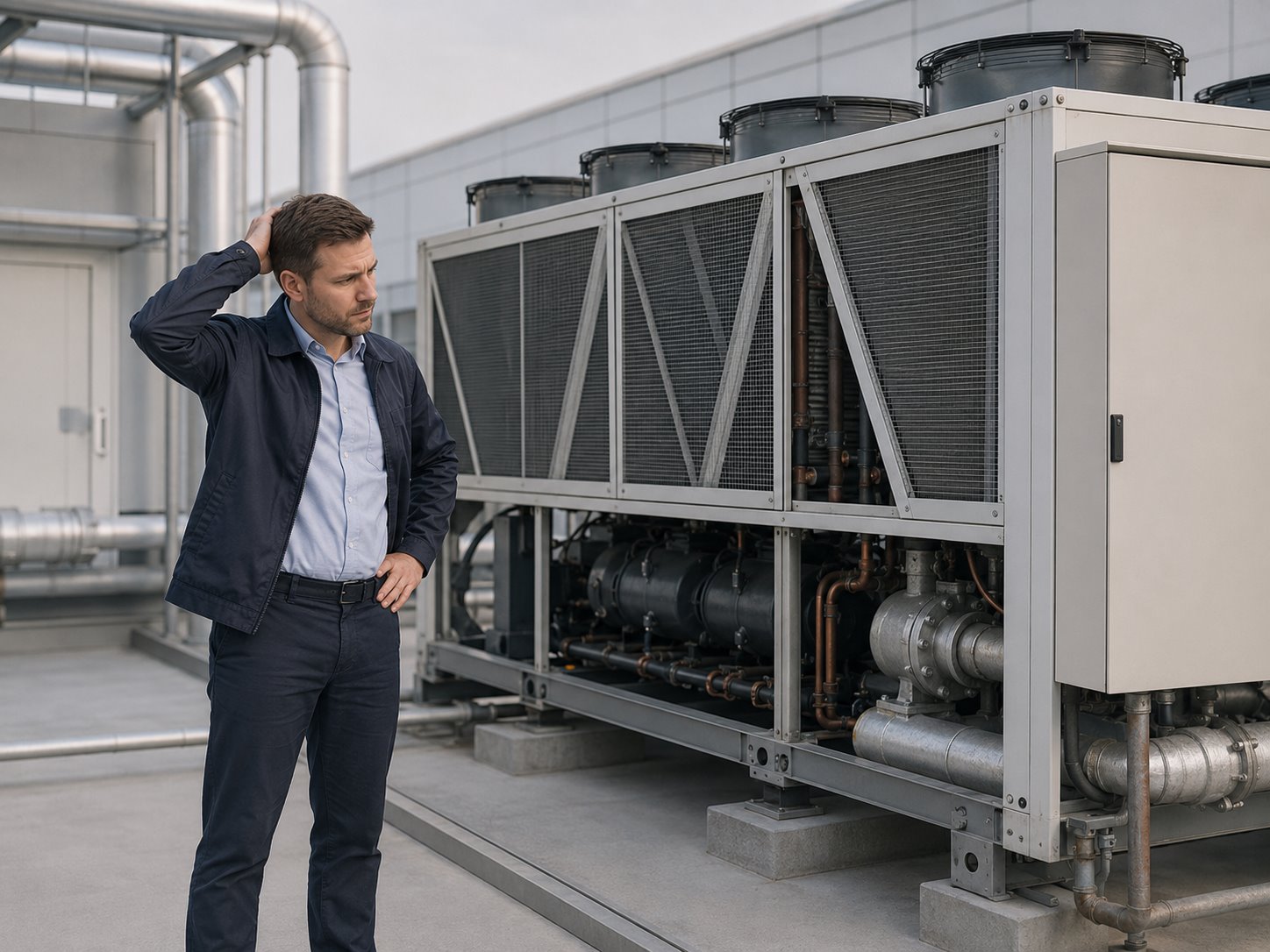
When the owner of a shopping centre, business centre, restaurant or fitness club faces high electricity bills or complaints about stuffy air, the first reaction is often predictable: the equipment needs replacing.
New air conditioners. New air handling units. New controls. New investment. At first glance, the logic is clear: if the system performs poorly, the equipment must be the problem.
But over twenty years of working with commercial properties, I have increasingly seen something else: businesses lose money not because their equipment is expensive or cheap, but because it is managed incorrectly.
Equipment is bought once. Operation costs money every day
During construction, clients scrutinise capital expenditure. They compare brands, cost estimates, warranties, technical specifications and rated energy efficiency. This is perfectly reasonable. Large building services systems are expensive, and owners are entitled to transparent pricing.
But once the building is in use, a different set of economics comes into play: operating costs rather than project estimates. These often determine how much money the building will consume over the next five, ten or fifteen years.
Businesses underestimate what happens after handover
During construction, building services receive plenty of attention. Designs, meetings, approvals, tenders, installation and commissioning. But once the acceptance certificates are signed, that focus often disappears. The system is effectively considered complete.
This is where the main risk begins. HVAC is not furniture or finishes. It is a living system that responds daily to the weather, people, operating schedules, tenants, tariffs, seasonal conditions and changes within the building.
If no one systematically monitors its operation after handover, it gradually drifts away from its original operating logic.
The biggest losses often do not look like a breakdown
The most dangerous operational problem is that it does not always look like a fault. Compressors run. Pumps run. Ventilation fans turn. The controls show no critical alarms. On paper, the system is in working order.
Yet the building may be wasting energy, providing inconsistent comfort and constantly requiring manual intervention.
- temperature setpoints are changed without analysing the consequences;
- operating schedules do not reflect actual building occupancy;
- ventilation and air conditioning start working against each other;
- individual control functions are disabled ‘temporarily’ but remain that way for years;
- staff resolve a local complaint but disrupt the system’s overall operating logic.
These issues rarely appear on alarm lists. Yet they can cost the owner money every month.
Expensive equipment cannot compensate for poor control logic
You can install high-quality chillers, modern VRF systems, efficient ventilation with heat recovery and good controls. But if operating modes are selected incorrectly, schedules are not reviewed and data is not analysed, the results will be mediocre.
In this sense, expensive building services can be even more risky. Owners expect a high price to mean low running costs and comfort automatically. But equipment cannot compensate for poor operational practices on its own.
Energy efficiency does not begin with new equipment. It begins with understanding how the equipment already installed operates.
Five per cent can be worth more than you think
The property sector often looks for major solutions. Large-scale upgrades. New plant. Complete refurbishment. But in many buildings, the first opportunity for improvement is much closer to hand.
Sometimes, a proper operational review is enough: examining actual operating modes, schedules, temperatures, energy consumption and the interaction between ventilation, heating and air conditioning. This can reveal where the system is wasting energy.
Even savings of 5–10% without replacing equipment can represent a substantial sum for a large property. For a single shopping centre, that can mean hundreds of thousands of hryvnias a year. Across a property portfolio, it can mean millions.
Comfort is also a financial indicator
For a restaurant, hotel, fitness club, shop or business centre, indoor conditions have a direct financial impact. Visitors may not know which air handling unit is on the roof. Tenants may not understand how the controls are configured. But everyone quickly feels the result.
- stuffy air;
- draughts;
- overheated areas;
- cold workstations;
- unpleasant odours;
- insufficient fresh air.
At that point, an engineering issue stops being purely technical. It becomes a business problem. People spend less time inside, tenants complain, staff performance suffers, and the owner incurs reputational and financial losses.
Maintenance should not begin only after a breakdown
At many properties, maintenance is still seen as a response to a breakdown. Something fails, so a technician is called. It gets hot, so the settings are changed. Complaints flood in, so the search for the cause begins.
But modern building operation should work differently. It should identify deviations before they become problems. It should analyse not only failures, but also system behaviour.
That is why the future of building operation involves more than maintenance. It includes retro-commissioning, analytics, centralised monitoring and control, energy audits, setpoint management, control algorithm checks and regularly restoring the system’s correct operating logic.
The next stage for the Ukrainian market: control after handover
The Ukrainian market has already learnt how to build complex building services systems. We know how to design, install and commission modern equipment and work with world-class technologies.
But the next level is not just about new brands or more expensive solutions. It lies in operation: the owner’s ability to see how the building performs after handover, how much it actually consumes, where it loses money and who is accountable for the result.
The real value of HVAC is not created on installation day. It is created every day through operating modes, comfort, energy bills and predictable costs.
That is why owners should ask not only, ‘What equipment should we install?’ but also, ‘Who will manage this equipment, and how, in one year, three years and ten years?’
Expensive equipment is an investment. Incorrect operation is a daily drain on money. And for many Ukrainian buildings, this is where the greatest opportunity for improved efficiency lies today.