Restaurants · Approximately 200 m²Team experience4 min read
Shisha lounge with displacement ventilation
Ensure consistent removal of contaminated air from the occupied zone without draughts or excessive mixing.
SiteA shisha lounge intended for shisha smoking.
Floor areaApproximately 200 m²
BriefEnsure consistent removal of contaminated air from the occupied zone without draughts or excessive mixing.
SolutionWe installed displacement ventilation: conditioned supply air was delivered at low level, with air extracted at high level above the smoking areas.
ImplementationConditioned air was supplied evenly at low level, at low velocity and below room temperature.
ResultThe displacement arrangement provided directed removal of contaminated air at a lower design airflow rate than an intensive mixing arrangement.
The brief
Ensure consistent removal of contaminated air from the occupied zone without draughts or excessive mixing. At the same time, the required system airflow rate and the heating and cooling capacity for outdoor air had to be limited.
Solutions
We installed displacement ventilation: conditioned supply air was delivered at low level, with air extracted at high level above the smoking areas. A dedicated air conditioning and supply system was created to maintain the required supply air conditions.
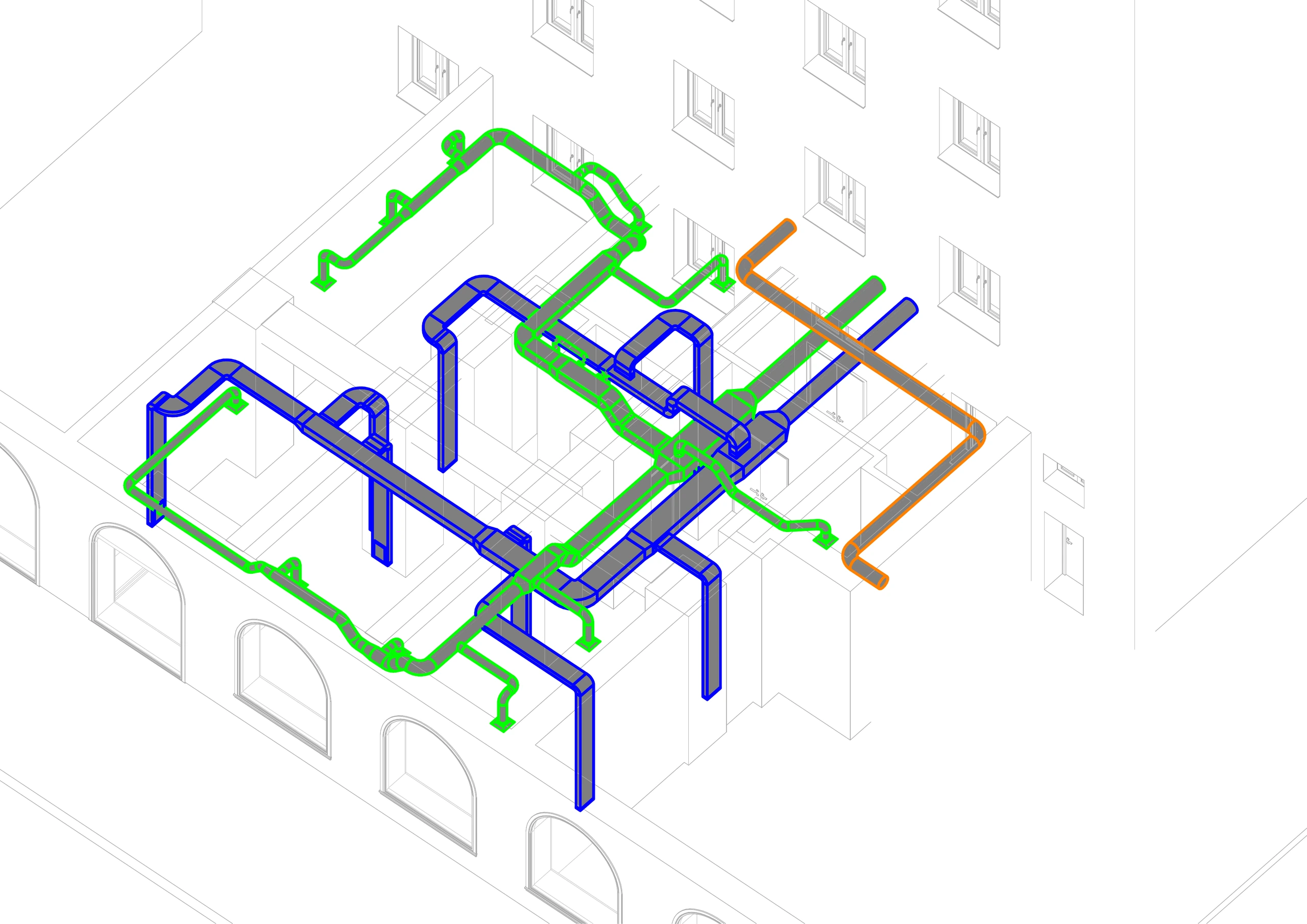
Ventilation design model for the shisha lounge, showing high-level main ducts and duct drops to the low-level zone. The 3D view helps coordinate services at different heights with partitions and the interior design.
How and why we implemented it
Conditioned air was supplied evenly at low level, at low velocity and below room temperature. Extract terminals were positioned above the smoking areas to direct contaminated air upwards. Supply air parameters, air distribution and high-level extraction were calculated as a single aerodynamic system.
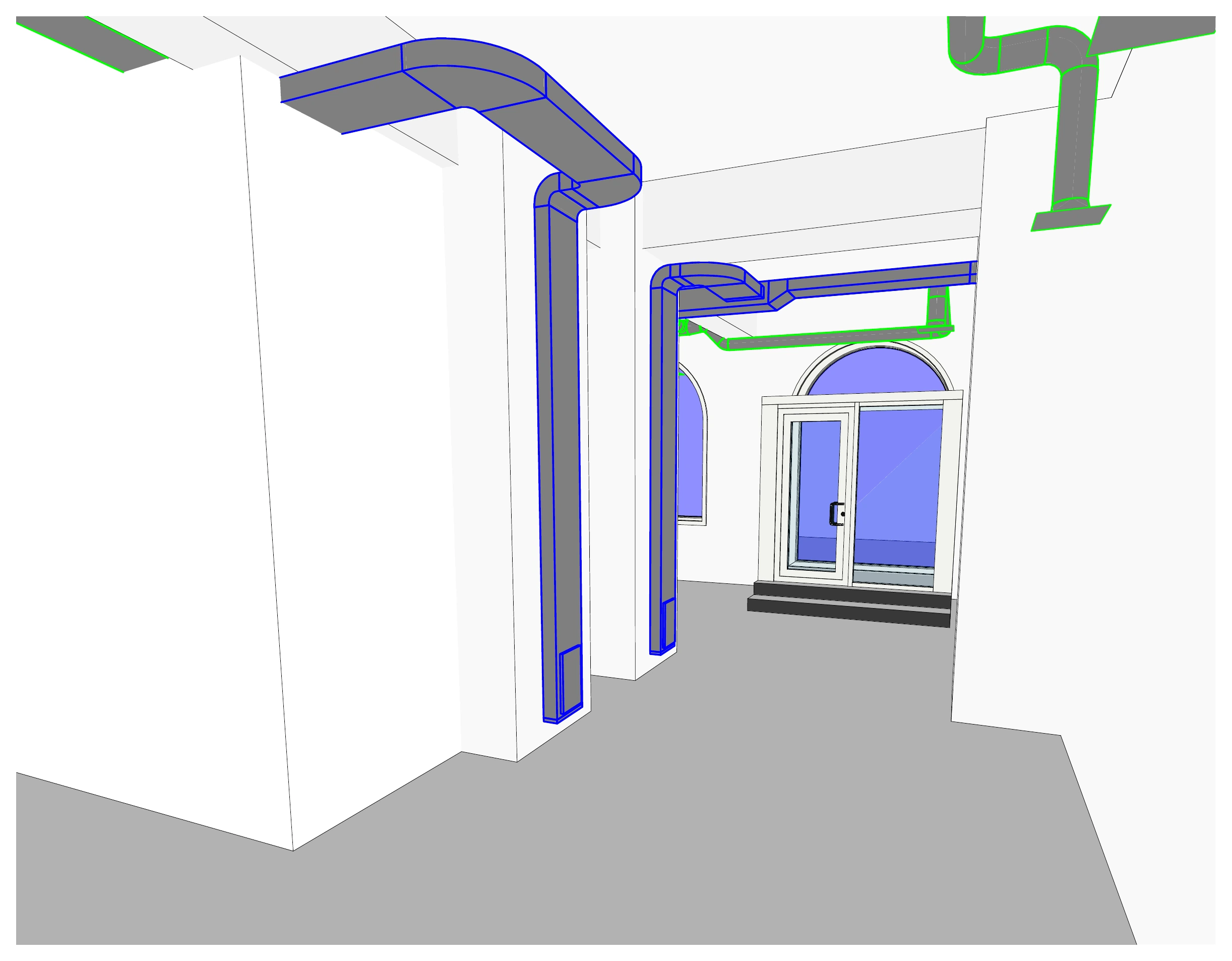
Detail of the lounge model showing the low-level air supply, with a vertical duct drop along the wall and high-level main ducts. For this air distribution arrangement, both the outlet locations and the temperature and velocity of supply air near occupants are important.
Result
The displacement arrangement provided directed removal of contaminated air at a lower design airflow rate than an intensive mixing arrangement. This made it possible to heat and cool the supply air within the available electrical capacity.