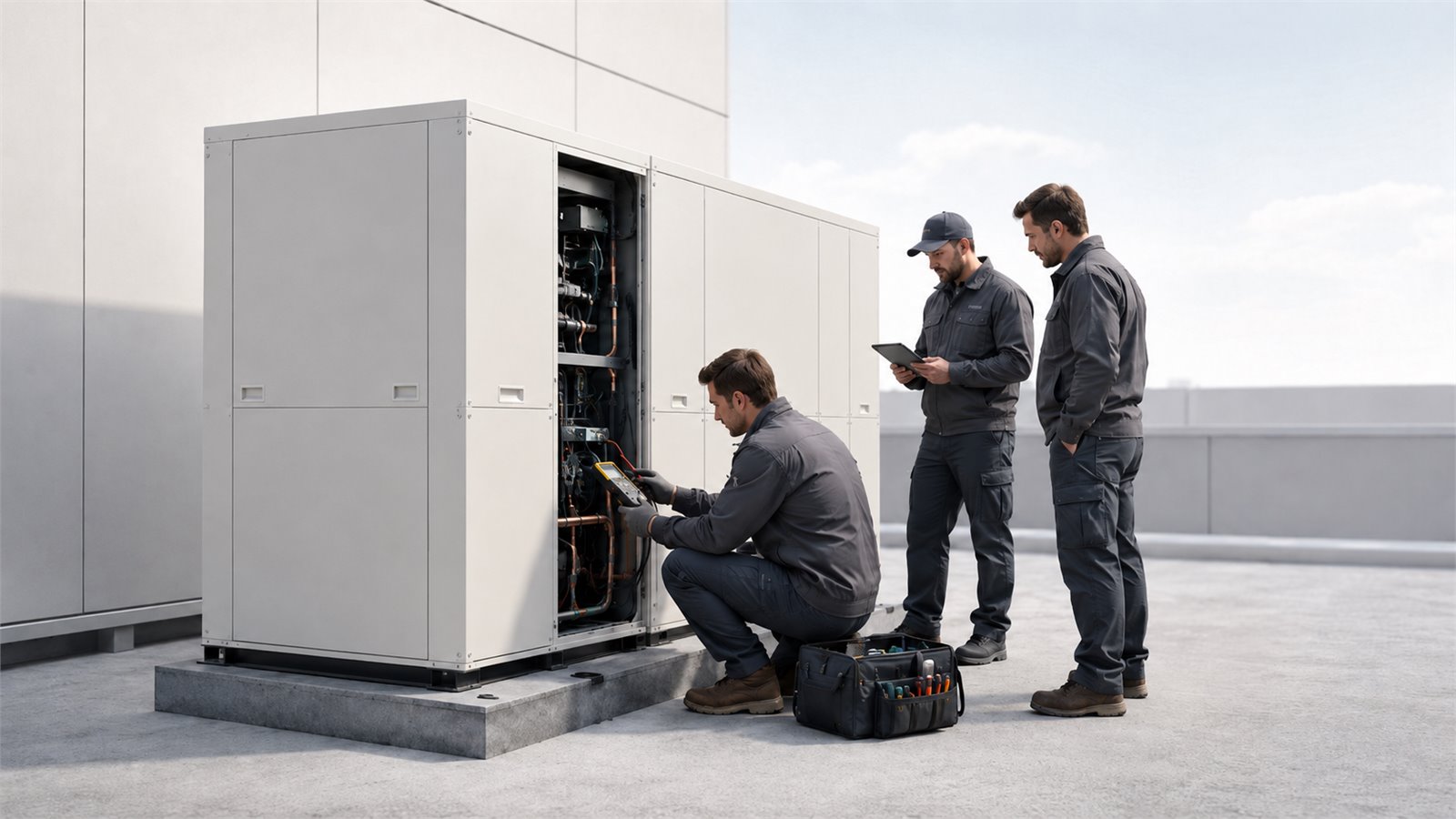
Most clients believe that the hardest part of a project ends when the installers leave the site. The ductwork is installed. The equipment is in place. The cables are connected.
The system has been started up. At first glance, everything is ready for operation. This is precisely when many people make the crucial mistake: confusing equipment start-up with system commissioning.
Installation and proper operation are not the same thing
Imagine a modern office building. Hundreds of sensors. Dozens of indoor units. Ventilation. Controls.
A building management system (BMS). In formal terms, everything works. Everything switches on. Everything responds to commands. But does that mean the building will operate efficiently?
Not at all.
Commissioning is when the system starts working as an integrated whole
An individual fan may work. An individual air conditioner may work. An individual sensor may work. But a building is not a collection of standalone devices. It relies on dozens of systems interacting.
Commissioning is when we check whether those systems interfere with one another.
- Is the air conditioner cooling air that the ventilation system will reheat a minute later?
- Is equipment running when the building is empty?
- Do actual air flow rates match the design values?
This is often when problems emerge that cannot be seen on drawings.
The costliest defect is the one that does not cause a breakdown
Paradoxically, the most dangerous mistakes rarely cause a system shutdown. Quite the opposite. The equipment keeps running. The building remains in use. People see no obvious problem.
They simply pay more for electricity every month. They simply receive complaints from tenants. They simply lose comfort. Sometimes for years.
Cutting commissioning costs is one of construction’s costliest false economies
During project delivery, the client sees thousands of metres of ductwork, expensive outdoor units and complex controls. Against that backdrop, commissioning seems a small part of the budget. That is why it is often treated as a formality. But the reality is different. Commissioning determines whether the system will work as the designer intended.
- Whether it will be economical to run
- Whether it will provide comfort
- Whether it will be controllable
Commissioning is not the end of a project
Most people see commissioning as the final stage of the works. In reality, it is the first day of the system’s life. This is when engineering decisions meet reality for the first time. And this is when it becomes clear whether we have created merely a collection of equipment or a genuinely functioning engineering system.