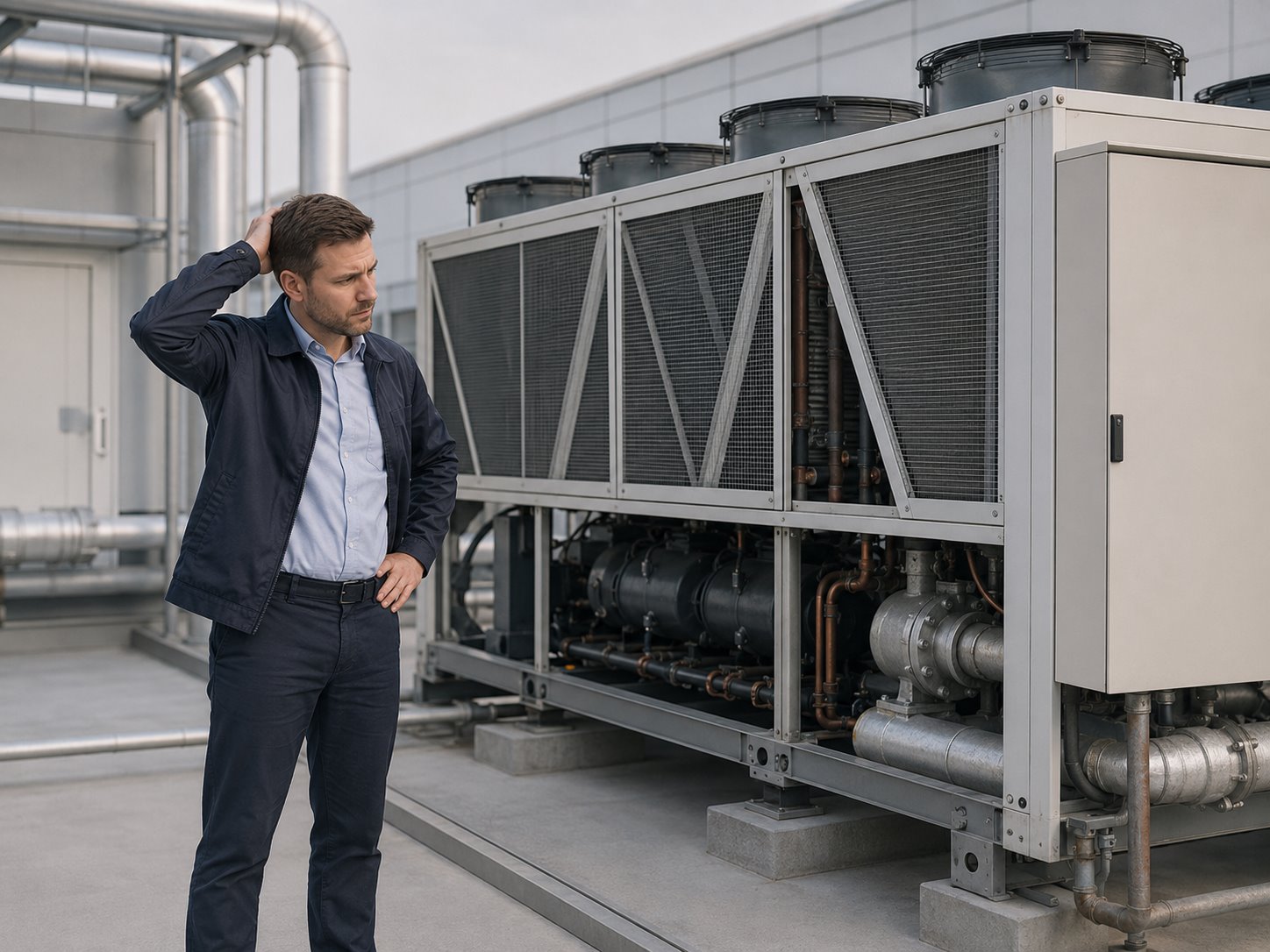
Sooner or later, the same scene plays out in almost every large building. The finance director looks at the gas or electricity bills. Frowns. Calls a meeting.
Then comes the phrase that so often sets poor decisions in motion: ‘We are paying too much. We need to do something urgently.’
The energy bill is not the cause of the problem. It is merely a symptom of how the building operates every day.
Magic instead of diagnosis
This usually produces a familiar set of ideas. Lower the temperature. Reduce system operating hours. Switch off ventilation at weekends. Supply less air. Ban opening windows. Or buy new equipment straight away.
At first glance, this looks like cost management. In reality, it very often looks like magic. The business sees the bill, but not the cause. So it starts changing whatever is most obvious.
The wrong first question
When bills rise, the first question is usually: how can we reduce consumption quickly? But in engineering, that is not always the best starting point.
A better question is:
Why does the building consume so much energy in the first place?
Not how to cut costs at any price, but why they have reached this level. Without an answer to that question, any saving can quickly become a new problem.
Buildings often operate according to accidental logic
Very often, a large building operates neither as its designer intended nor as its owner required. It follows a logic that has gradually evolved over years of operation.
- following tenant complaints
- following refurbishment of individual areas
- following changes to operating schedules
- following emergency manual interventions
- following changes in facilities staff
Initially, every decision seems logical. But after a few years, nobody remembers why the system operates that way. Everyone simply gets used to it. And that habit starts costing money.
The equipment is not always the problem
When costs rise, it is easy to blame the equipment. An old chiller. An inefficient boiler. Outdated controls. A lack of heat recovery.
Sometimes that is indeed the case. But not always. Often, the problem is not poor equipment, but good equipment operating in the wrong modes.
New equipment does not correct old operating logic. It simply starts following the same flawed rules.
Energy efficiency starts with understanding
Genuine energy efficiency starts neither with a tender nor with a quotation. It starts with analysing what is actually happening in the building.
- which systems run without any real need
- where operating modes do not match actual building use
- which zones are overheated or overcooled
- where controls exist in name only, without managing the outcome
- which decisions have long become habits, with nobody checking whether they still make sense
Only then can we discuss upgrades honestly. Because only then is it clear what we want to change and what outcome we expect.
Sometimes the cheapest solution is not something you buy
The paradox is that sometimes the cheapest way to save a million hryvnias is not to spend another million. It is to finally understand why that million is being spent in the first place.
Engineering analysis rarely looks impressive. It is harder to showcase in a presentation than a new heat pump or control system. Yet it is often what separates genuine savings from haphazard attempts to cut something.
Less magic, more understanding of causes
When a business reacts only to the bill, it is almost always too late. The bill already shows the consequence. Management starts earlier — with operating modes, schedules, settings, control sequences, monitoring and accountability.
The first step towards savings is not buying a new system. It is to stop running the building by guesswork.