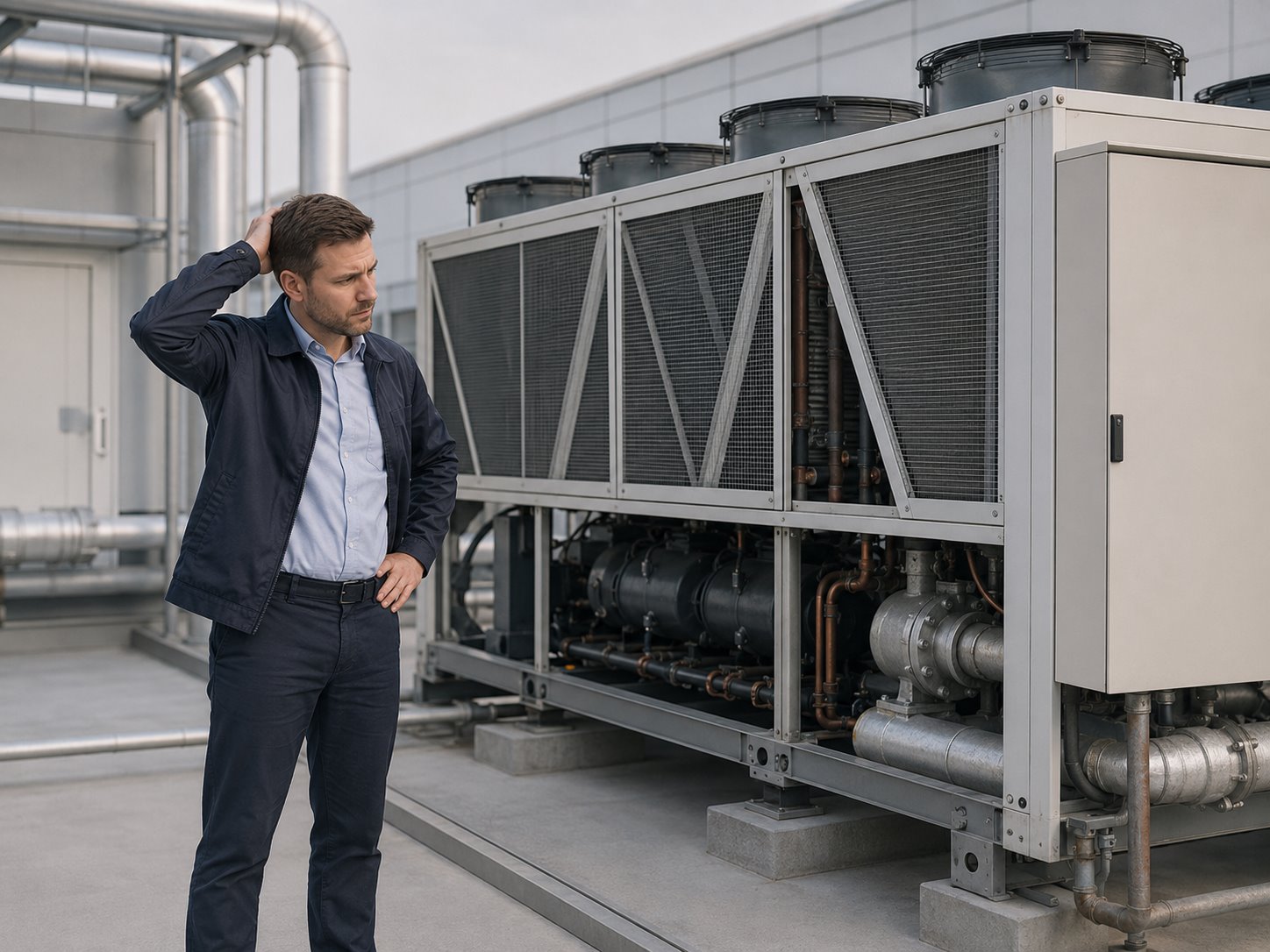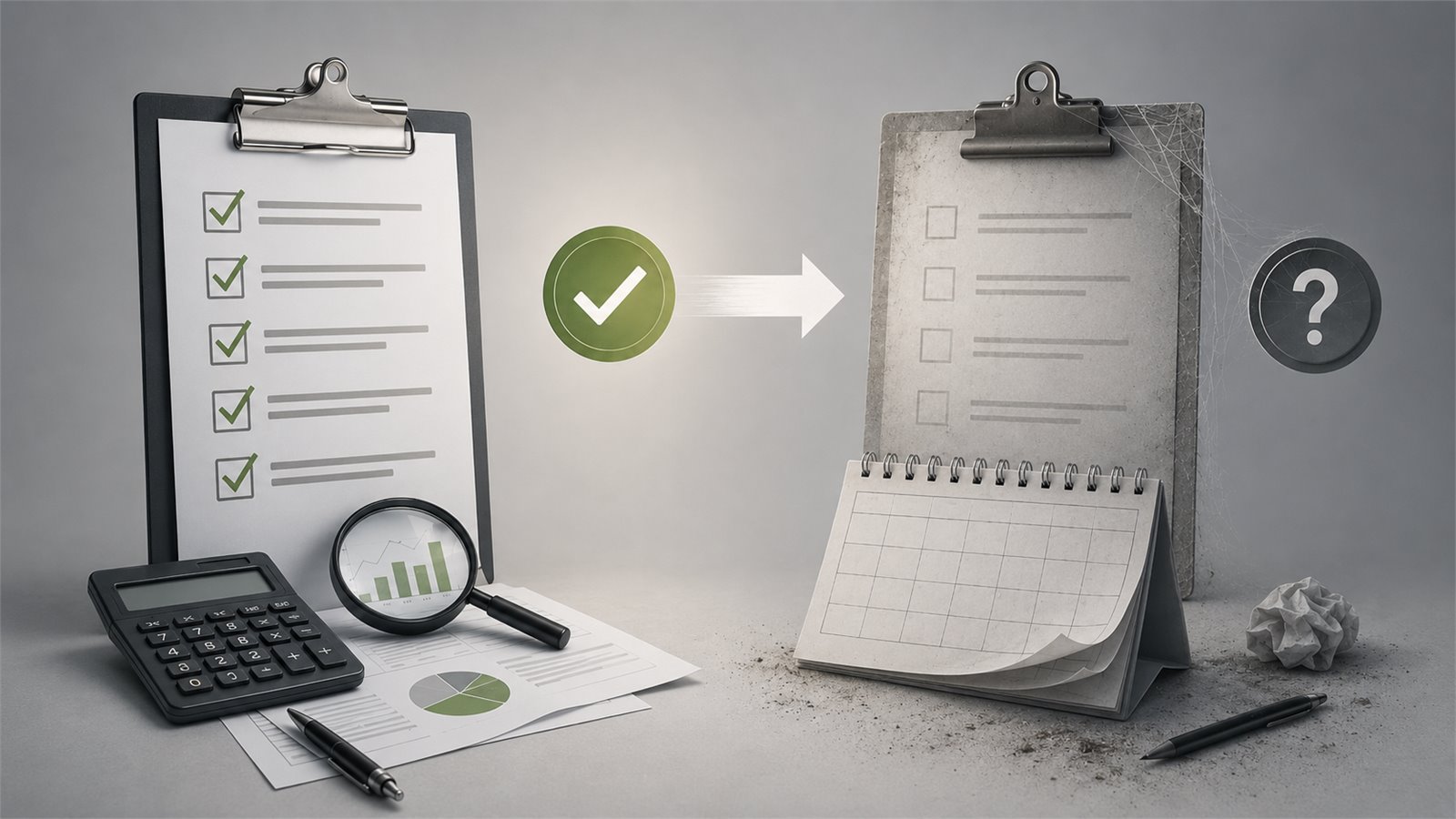
There is a strange pattern in business. The more expensive an engineering purchase, the more attention it receives before it is bought. And the less it receives once the equipment is installed, the acceptance documents are signed and the building is in operation.
This is often exactly where oversight ends. Yet from the owner's perspective, this is where it should only be beginning.
We keep a close eye on purchasing
Look at how decisions about major engineering systems are usually made. Months of discussion. Tenders. Comparison tables. Presentations. Meetings. Approvals.
Dozens of people may be involved in selecting equipment. Comparing brands, efficiency ratings, warranty terms, delivery times, installation costs and service support.
Businesses fight for every percentage point of discount. Every line in the specification. Every figure in the quotation.
After start-up, the questions disappear
Then the equipment is purchased. Installed. Commissioned. The acceptance documents are signed. And very often, the system then seems to disappear from management's attention.
- No one revisits the original promises
- No one compares actual consumption with expectations
- No one checks whether the advertised functions work
- No one asks whether costs have fallen
- No one assesses whether people are more comfortable
And that is strange. Businesses scrutinise costs very carefully before a purchase. But they check the results far less often afterwards.
Investment without checking the outcome
Imagine a property where half a million dollars has been spent on engineering systems. That is a serious investment. It went through a lengthy approval process, was justified to the investor, and came with explanations of future savings and expected benefits.
Now a simple question. A year after start-up, can anyone clearly say whether the objective has been achieved?
- Is the system working as intended?
- Have the promised savings been achieved?
- Are the functions that were paid for actually being used?
- Do actual operating modes match the design intent?
- Has the building changed since start-up to the point where the system now needs to be reconfigured?
Very often, the answer is unknown. Not because anyone is hiding anything. Simply because no one asks the question any more.
Expensive solutions can exist only on paper
I regularly see properties where expensive engineering solutions continue to exist only on paper. Heat recovery units are installed, but the airflow actually bypasses them. Controls are in place, but some control sequences are disabled. A BMS is installed, but is used only as an alarm display.
Advanced functions are no longer used. Settings were changed years ago. Operating schedules do not reflect how the building is actually used. Sometimes no one even remembers why things were set up that way.
Results need the same scrutiny as the budget
In any other business process, failing to monitor results would seem strange. A company does not buy a new production line and then leave its productivity unchecked for years. A retail chain does not launch a new format and stop analysing sales.
Yet this happens constantly with engineering systems. After start-up, they become the responsibility of the operations team, where the main criterion often boils down to a very simple question: is it running or not?
For the owner, that is not enough. ‘Running’ does not mean ‘running correctly’. And it certainly does not mean ‘running in an economically justified way’.
Plan post-purchase oversight before you buy
In my view, when choosing an engineering solution, the right question is not just: how much does it cost? Nor even: what savings will it deliver?
The right question is different: how will we check that, a year from now, this system is still doing what we bought it to do?
This takes more than equipment and installation. It requires clear performance criteria:
- expected energy consumption
- permitted operating modes
- comfort monitoring
- regular analysis of deviations
- a designated person responsible for reviewing settings
- a link between technical data and financial performance
A question for the investor
Perhaps the most important question for an investor is not: how much does this solution cost? But rather: who will monitor its performance after start-up, and how?
Because the most expensive equipment is not necessarily the equipment with the highest price tag. Nor is it the equipment with the most complex controls.
The most expensive equipment is the equipment that, a year later, no one can explain why they bought.