When choosing a building services contractor, an owner or manager almost always asks the same question: what warranty do you offer? They usually receive a familiar set of answers.
- the manufacturer’s equipment warranty
- a warranty on installation work
- a warranty period specified in the contract
- servicing after start-up
These are all valid provisions. But they do not answer the owner’s main question: will the building operate properly once the equipment is installed, the acceptance certificates are signed and the business starts using the system every day?
Clients rarely buy an air conditioner, a fan or controls as an end in itself. They buy comfort, quiet, air quality, reliable operation, predictable costs and fewer operational problems.
A component warranty is not a system performance guarantee
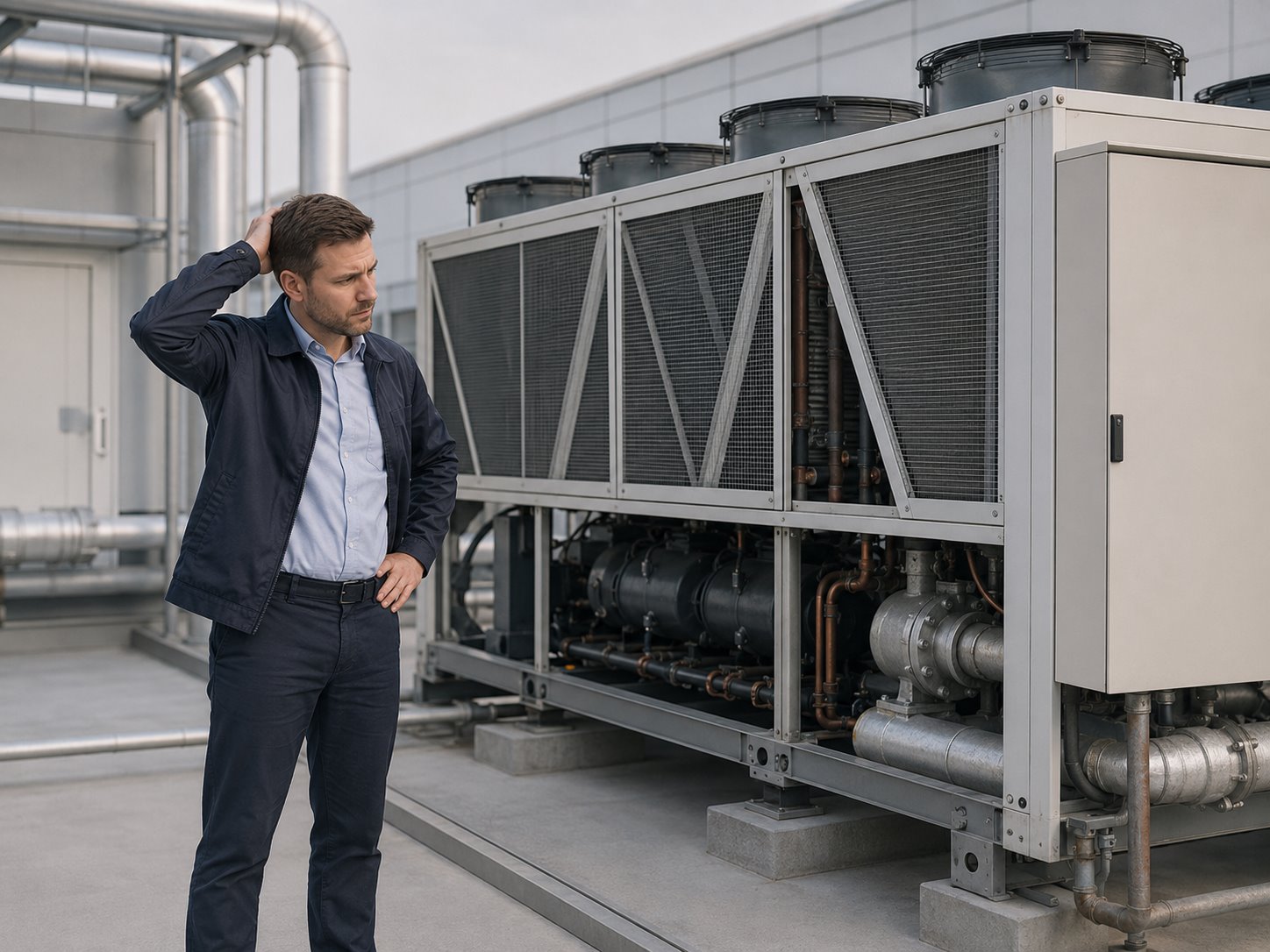
In engineering, there is a difference between serviceable equipment and a system that works correctly. The equipment may be in perfect working order. The compressor starts. The fan rotates. The controls show no alarms. The sensors transmit signals. On paper, everything works.
Yet the space may still feel stuffy. Or noisy. Or cold in one zone and hot in another. Or the system may continually run in unnecessary modes, creating avoidable OPEX for the owner.
In this situation, it is essential to understand exactly what was guaranteed: the working condition of an individual unit, or the performance of the building’s system.
When everything works but the business does not get the result
In day-to-day operation, this is straightforward. The office has opened. The restaurant is welcoming guests. The fitness club operates from morning to evening. The hotel is checking guests into rooms. All acceptance certificates are signed, the equipment is under warranty and there are no alarms.
But people complain about stuffiness, draughts, odours, noise or fluctuating temperatures. Tenants put pressure on the management company. The facilities team makes manual adjustments every day. The owner sees the energy bills and cannot understand why the system costs so much to run.
- the manufacturer will say the equipment is in working order
- the installer will say it was installed in accordance with the design
- the designer will say the original design inputs were different
- the facilities team will say this is how the system was handed over
And technically, each may be right. But the owner is not getting what they actually paid for. Instead of a controllable building services system, they have a collection of responsible parties, each defending their own scope.
The market is used to guaranteeing the process
Most contracts describe the process well. Equipment lists. Scope of works. Warranty periods. Service terms. Procedures for replacing parts. These are necessary, but they are not enough.
Far less often do the documents and the design approach clearly define what matters most: the performance expected once the system is operational.
- the temperature to be maintained in the occupied zone
- the acceptable noise level for the particular space
- the ventilation rate required under actual operating conditions
- how the system responds to peak loads
- the operating modes to be configured in the controls or BMS
- the operating costs that are reasonable for this solution
Without these answers, a warranty can easily become protection for individual parts rather than for the building’s operation.
A performance guarantee begins before installation
You cannot guarantee an outcome at the end if it was not agreed at the beginning. It takes shape not after the acceptance certificates are signed, but when the brief is first defined.
You need to understand exactly how the building will operate. How many people will be inside. How the schedule changes throughout the day. Where quiet is needed. Where air quality is critical. Where a rapid system response matters. Where redundancy is required. Where energy efficiency will be the main priority. And where predictability and ease of operation matter more to the owner.
A performance guarantee is not an impressive clause in a contract. It is the ability to define, before work begins, exactly what constitutes the right outcome for a particular business.
Where the financial value begins
For a property owner, HVAC is more than equipment above the ceiling or on the roof. It is part of the building’s financial performance. It affects tenant comfort, business continuity, operating costs, the risk of breakdowns, peak demand and the overall manageability of the property.
A solution that is cheaper initially may prove more expensive over its life cycle. Not because the brand is poor or the equipment inadequate, but because the system does not match the building’s actual operating pattern, is poorly configured, is difficult to operate or does not give the owner effective control.
This is where a guarantee stops being a formality and becomes a matter of cost of ownership. The owner needs to know more than who will replace a part if it fails. They need to know whether the building is losing money every day through incorrect operating modes, excessive consumption, user complaints and manual intervention in place of clear control logic.
Why this is difficult for the contractor
Because guaranteeing performance is harder than supplying equipment. It requires control over the entire delivery chain, not just one part of it.
- a properly defined technical brief
- system calculations and selection
- coordination with the building’s architecture, interior design and operational processes
- quality installation
- commissioning and balancing
- controls configuration
- verification of actual operating conditions after start-up
- support for the facilities team during the initial operating period
In practice, the main problems often arise at the interfaces between these stages. A design exists, but the building has changed. Equipment has been supplied, but operating modes have not been configured. Controls are installed, but the facilities team does not understand the logic. Servicing is available, but it responds only to breakdowns, not to declining efficiency.
A typical owner’s mistake
The most common mistake is to judge an engineering solution solely by its purchase price and warranty period. This is understandable: the figure in a quotation is easy to compare. So is the warranty period.
But in a commercial building, the real difference often emerges later. In electricity bills. In the number of complaints. In tenant retention. In downtime. In operating costs. In whether the management company can quickly understand what is happening with the system.
That is why the question needs to be broader: not just “what warranty do you offer?”, but “what performance, exactly, do you guarantee for my building?”
A new benchmark for quality
A modern building is judged by more than its façade, location, fit-out and equipment brands. Other factors increasingly matter to the owner: how manageable, energy-efficient and reliable the building is, and how predictable its costs are.
Good engineering should not demand daily heroics from the operations team. It should work in a clear, understandable way. Provide data. Allow control over operating modes. Respond to changing loads. Avoid unnecessary costs wherever possible.
This is the difference between an equipment warranty and a performance guarantee. The former protects a component. The latter protects the normal operation of the business within the building.
Conclusion
Mature engineering begins when an owner stops thinking solely in terms of acceptance certificates, warranty documents and component replacement times. They begin to see the system as part of an asset that either helps the building generate income or drains money every day through weak control logic, poor operating modes and a lack of oversight.
A performance guarantee marks a shift from ‘the equipment is working’ to ‘we understand what is happening at the property, what it costs and how to manage it’.
An equipment warranty protects a component. A performance guarantee protects money, comfort and control over the building.