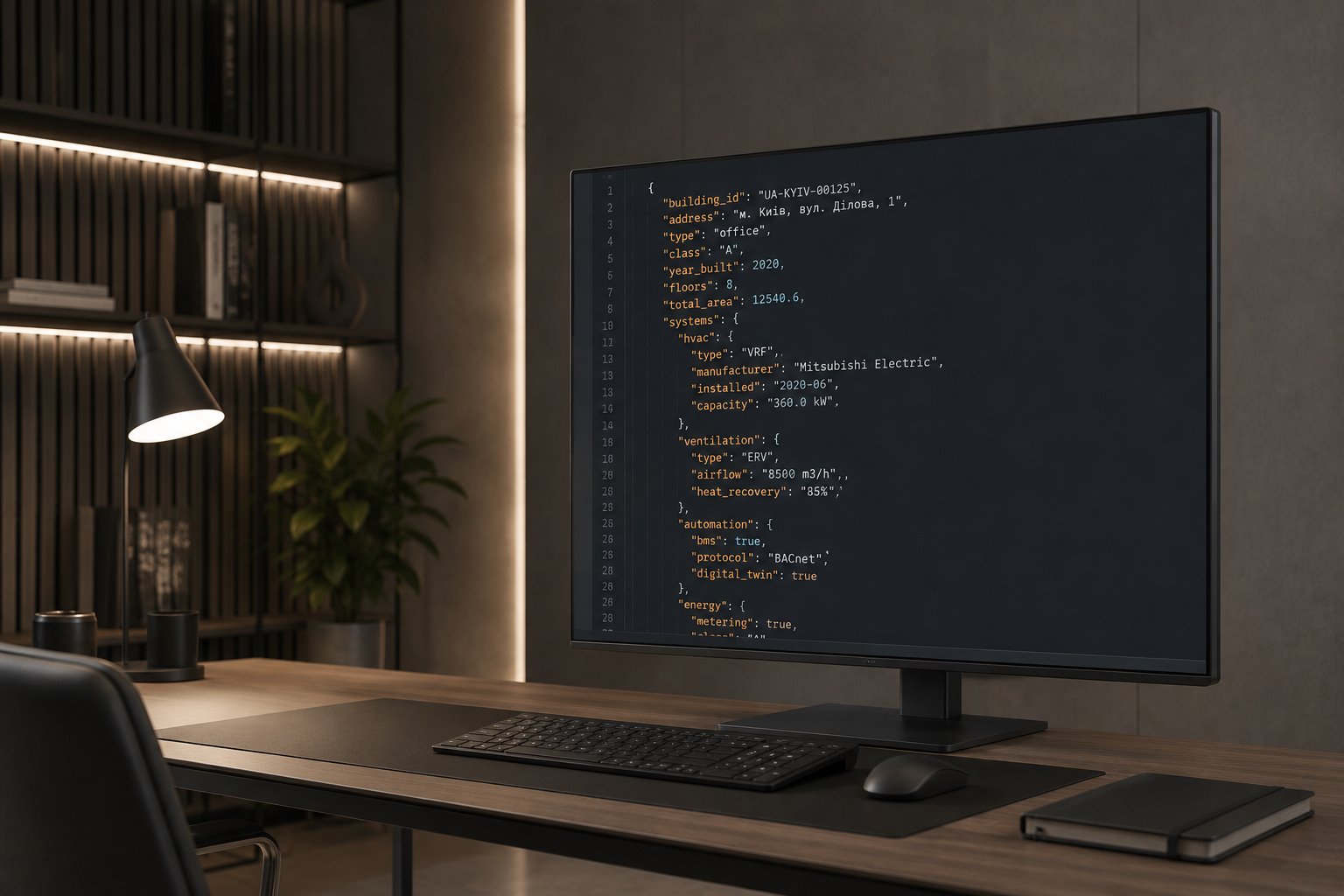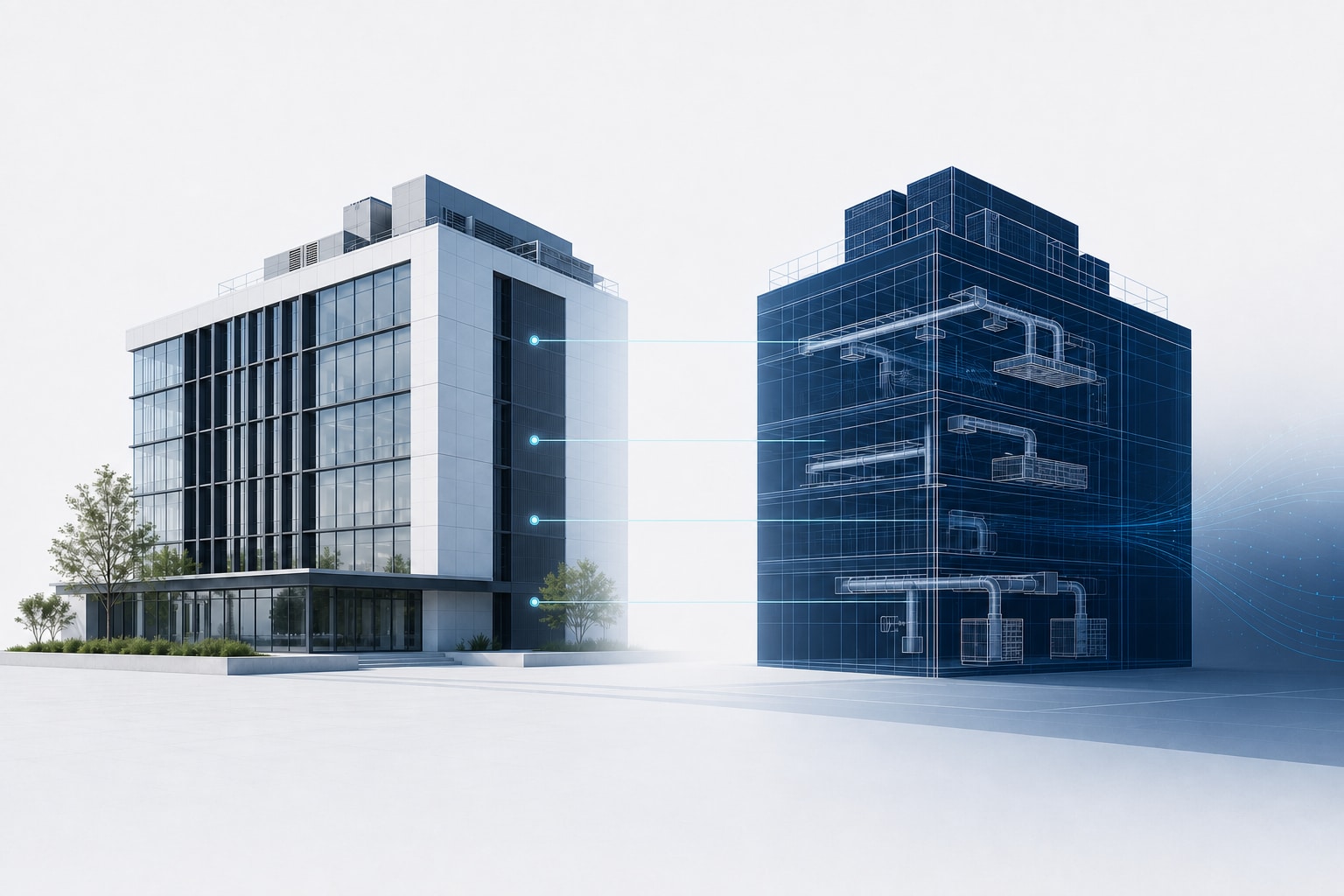
Just a few years ago, a building digital twin was mainly associated with a 3D model or a BIM design. Today, the situation has changed fundamentally.
Worldwide, the digital twin is moving beyond its role as a design tool and gradually becoming a building management system. Its main purpose is not to display an attractive 3D model, but to support sound decisions based on real data.
A digital twin shows not only how a property is built, but also how it is operating right now.
From BIM to a living model of the building
A BIM model describes how a property is built. A digital twin shows how it is operating right now.
It brings together:
- the building management system (BMS)
- HVAC equipment
- electricity meters
- temperature, humidity and CO₂ sensors
- weather data
- equipment operating history
- service logs
The result is a unified digital model that is continuously updated alongside the real building.
The next stage: artificial intelligence
The biggest trend of 2026 is the integration of digital twins with artificial intelligence systems.
Where a digital twin once simply displayed information, today it already helps identify optimal operating modes. For example, it:
- predicts cooling system loads
- takes weather forecasts into account
- analyses the building’s thermal inertia
- assesses equipment operating efficiency
- identifies hidden excess energy consumption
- recommends optimal settings
This gives the engineer not just data, but actionable recommendations to support decisions.
Why this matters to building owners
For a property owner, a digital twin is not about modern technology for its own sake. It is about the asset’s financial performance, reliability and controllability.
Key benefits:
- lower electricity costs
- greater reliability of building services systems
- fewer emergency shutdowns
- longer equipment service life
- improved comfort for building users
- higher property market value
How it works in practice
Creating a digital twin does not require a new building or a complete replacement of the controls. In most cases, connecting the existing systems is sufficient.
A typical process is as follows:
- Connect to the BMS and building services systems.
- Collect historical data.
- Integrate weather services and external factors.
- Develop a digital model of building operation.
- Analyse data using AI.
- Implement recommendations.
- Monitor results and continuously train the model.
This sequence is now becoming the foundation of modern building management systems.
The future is autonomous control
Today, a digital twin helps engineers make decisions. The next stage is partial automation of those decisions.
The system can independently:
- adjust HVAC setpoints
- optimise chiller operation
- redistribute loads between VRF systems
- provide advance warning of equipment failures
- activate energy-saving strategies based on weather and building occupancy
The SM Systems approach
We see a digital twin not as an attractive 3D model, but as a tool for practical control of building services systems.
Our goal is to create a digital model that continuously analyses HVAC operation, identifies opportunities for savings, predicts future loads, helps engineers make informed decisions and prepares the building for AI-based autonomous control.
A digital twin is not a technology of the future. For modern commercial buildings, it is already becoming the new standard for efficient management.
Today, a digital twin helps manage a building. Tomorrow, it will form the foundation for autonomous AI-based control of building services systems.