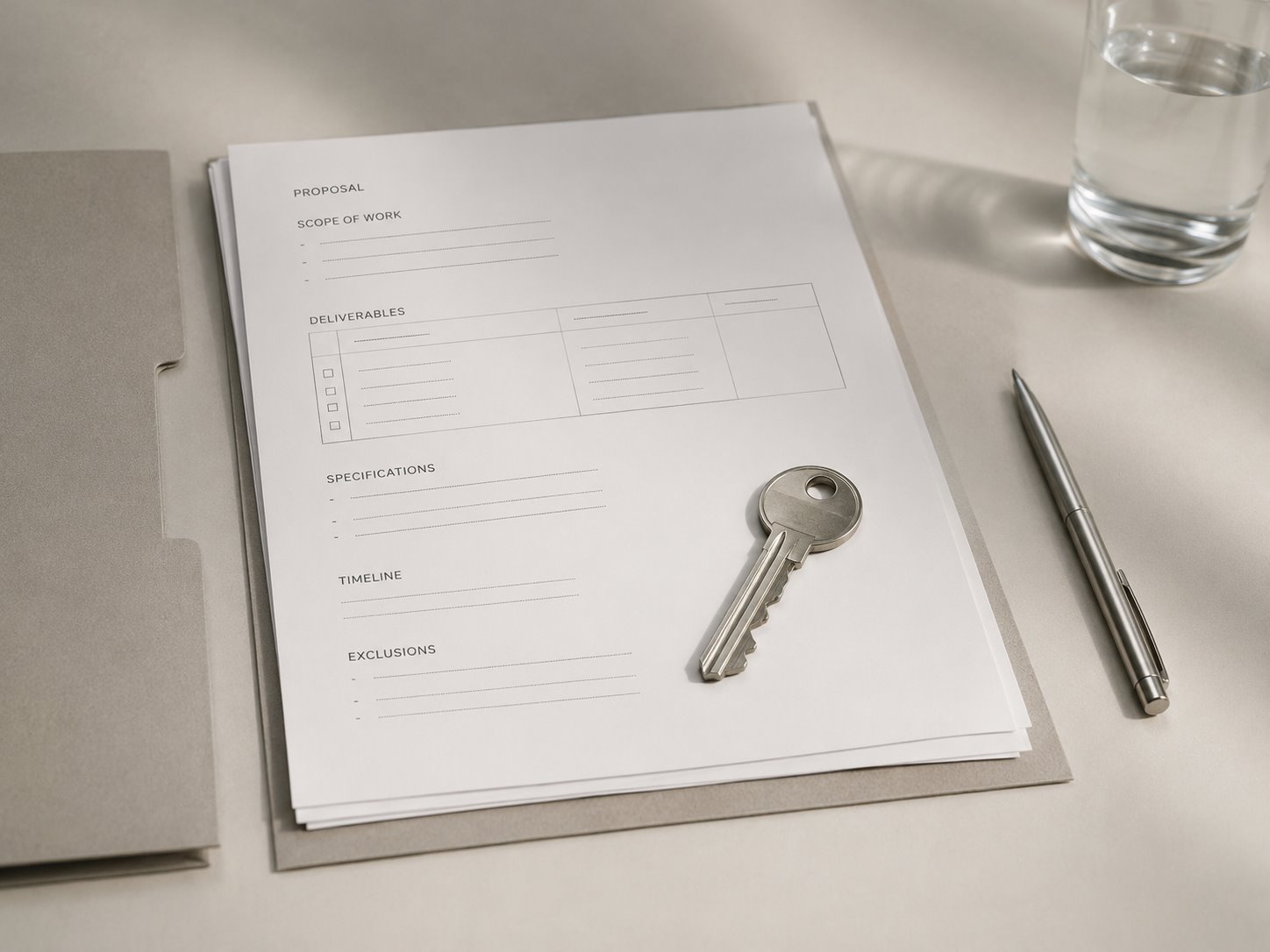
When a developer starts a new office building, shopping centre, hotel, logistics complex or production facility, the design brief very often sounds familiar: make it reliable, stay within budget, select suitable equipment, ensure energy efficiency and avoid problems at start-up.
These are valid considerations. But in my view, they are no longer enough. A commercial building lasts far longer than any current state of the equipment market, technologies, tariffs, tenant requirements and investor expectations.
Ten years from now, no one will judge a building brought into use today by how successfully the developer cut the initial cost estimate. It will be judged on other criteria: how much it costs to operate, how flexible it is, whether it can be upgraded, whether it is ready to work with data, and whether its building services have become a constraint on the asset itself.
A developer’s design brief must address not only how to construct the building today. It must also address what that building will be like in ten years’ time.
The old design brief was about equipment
For many years, the approach was clear. Specify air conditioning, ventilation, heating, controls, electrical services, water supply and fire safety systems. Calculate loads. Select brands. Agree the budget. Pass the expert review. Build. Commission.
Under this approach, the designer mainly answered technical questions: which chiller, which VRF system, which air handling unit (AHU), which pumps, valves, controllers, ducts and cables.
But a modern commercial building is no longer simply a collection of building services equipment. It is gradually becoming an integrated energy, digital and operational system. And that is precisely why the design brief must change.
The new question: will the building be able to adapt?
The main problem with many commercial properties is not that they are poorly built. They may be of a high standard when they first open. But a few years later, it becomes clear that any upgrade is too expensive, too complex or almost impossible.
Equipment data cannot be collected properly. New controls cannot be integrated. It is impossible to establish which systems are actually consuming energy. Control logic cannot be changed without modifying dozens of interdependent arrangements. New services or intelligent analytics cannot be connected because the building simply lacks the digital foundation.
And then the owner realises that, during construction, they saved money on the very things that determine the asset’s value ten years later.
A building’s future competitiveness is not established when an equipment brand is selected. It is established when the system architecture is defined.
Global manufacturers are already thinking differently
Look at the direction the major HVAC market players are taking. They talk less and less about individual units alone, and increasingly about platforms, data, remote monitoring, heat pumps, integration, services, lifecycle, energy management and operational analytics.
This is no coincidence. Manufacturers recognise that future value will be created not only in the compressor, fan or heat exchanger. It will come from systems’ ability to work together, share data, adapt to change and help owners make better decisions.
So the question for a developer is very simple: if global manufacturers are already preparing for the next stage, can a new building really be designed according to yesterday’s thinking?
The design brief I would set today
If I were preparing a design brief for a new commercial property, I would not start with a list of equipment. I would start with how the building should behave in the future.
I would set several fundamental requirements for the designer.
- Open controls architecture. The building must not be locked into one manufacturer, one service provider or one person who knows how everything works.
- Comprehensive energy metering. You cannot manage a building’s financial performance without knowing exactly where it consumes energy.
- Data from key building services systems. Temperatures, operating modes, alarms, running hours, loads, setpoints and consumption must all be available as historical records, not just when a fault occurs.
- Readiness for AI and analytics. Not because AI must control the building tomorrow, but because without data and open control logic, it cannot be useful at all.
- Flexibility to reconfigure. In five or ten years, tenants, schedules, layouts, tariffs, comfort requirements and safety requirements may change. The building must be able to accommodate these changes.
- Whole-life cost assessment. The developer must consider not only capital expenditure, but also future costs associated with energy, servicing, upgrades, downtime and loss of control.
The developer is buying future freedom, not just a design
There is an important investment rationale here. When a developer specifies open protocols, energy metering, proper supervisory monitoring and control, integration capabilities and a clear building services architecture, they are not buying ‘more expensive controls’. They are buying freedom to make future decisions.
The freedom to change service providers. The freedom to connect new analytics. The freedom to compare actual consumption with design estimates. The freedom to upgrade one system without disrupting the entire building. The freedom to demonstrate to an investor or tenant that the property is genuinely efficient, rather than simply well presented.
In a few years, this freedom may be worth far more than the initial savings.
The biggest mistake is designing solely around today’s budget
I understand developers who focus on CAPEX. Construction is expensive. Capital has a cost. Budgets always put pressure on decisions. But if the entire design brief is driven solely by the current budget, the property may acquire a hidden future liability.
This liability will not become apparent immediately. It will emerge when consumption needs to be reduced, new systems connected, tenants changed, new requirements met, high bills explained or analytics introduced.
And then it will become clear that the problem is not the equipment. The problem is that the design brief never required the building to be ready for change.
The building as a future asset
I believe the gap between commercial buildings will widen in the coming years. They may look the same from the outside. But inside, one building will have data, controllability, operating history, open controls and the capacity for upgrades. Another will have only a collection of closed systems that were properly installed at the time but have since become a constraint.
For an investor, these are two different levels of asset quality. For a tenant, two different levels of comfort and predictability. For the operations team, two different working environments. For the owner, two different futures.
A modern design brief must shape more than just a building. It must shape the building’s ability to stay modern.
That is why the developer’s main question to the designer today is no longer: ‘What equipment will we install?’
The main question is different: ‘What must we allow for now so that, in ten years, this property remains a valuable, controllable and competitive asset?’
Even if the designer uses digital tools, the brief still needs verified input data and someone accountable for the decisions. An analysis of AI’s role in HVAC design helps distinguish documentation automation from system selection and verification of results.
Practical solutions: engineering design; building services installation; solutions for critical infrastructure.
Practical experience
Related articles