For many years, the HVAC market followed a very clear model. The client selects the equipment. The designer carries out the system calculations. The contractor installs it. Commissioning is complete, acceptance certificates are signed and the warranty period begins.
Formally, the contractor’s work is almost finished at that point. The building then passes to the operations team, and the engineering system begins its real working life.
I believe this model is gradually becoming outdated. Not because installation has become less important, but because owners increasingly care less about the fact that a system has been installed and more about how the building operates once it is in use.
The HVAC contractor of the future will sell more than installation. They will sell the ability to keep an engineering system under control throughout its life.
Installation is no longer the finishing line
In the old model, installation was the main event. Budgets, schedules, supervision and responsibility were all built around it.
But from a building owner’s perspective, installation is only a brief stage. The real economics of a property begin once the equipment is running, tenants have moved in, operating modes have changed, tariffs have risen and the system is working every day.
That is where the major costs arise. Not in the certificate of completed works, but in how much the building spends on energy, how often failures occur, how consistent comfort is and whether the operations team can quickly understand what is happening.
The real complexity begins once the system is running
In twenty years of working with engineering systems, I have seen the same story many times. During construction, the system looks logical. Everything is clear in the design. The equipment has been selected. The schematics have been approved.
Then the building comes to life.
Tenants change. Some spaces stay open longer. Some equipment runs outside its design schedule. People complain about the temperature. The operations team changes settings manually. Ventilation works differently from what was expected. Each season brings different conditions.
It soon becomes clear that a good engineering system is about more than correct installation. It is about remaining controllable when the building’s real use starts to differ from the design.
Reactive service is no longer enough
The traditional service model is simple: something happens, so an engineer is called. They arrive, inspect the system, identify the cause and fix the problem. Sometimes quickly. Sometimes not.
For simple systems, that may have been enough. But modern commercial buildings are becoming more complex. They have many zones and operating modes, different operating schedules, controls, centralised monitoring, energy metering, heat pumps, VRF, chillers, ventilation, pump sets and heat recovery.
In a building like this, a problem often does not look like a breakdown. It looks like a gradual loss of efficiency.
- equipment runs longer than necessary
- the system frequently switches to inefficient operating modes
- comfort is maintained through excessive energy consumption
- some automatic controls are effectively overridden manually
- minor deviations accumulate over months
These losses are not always visible on the day they arise. But the owner pays for them every month.
The new contractor works with data
The HVAC contractor of the future will not stand out simply for installing systems well. That is already a basic requirement.
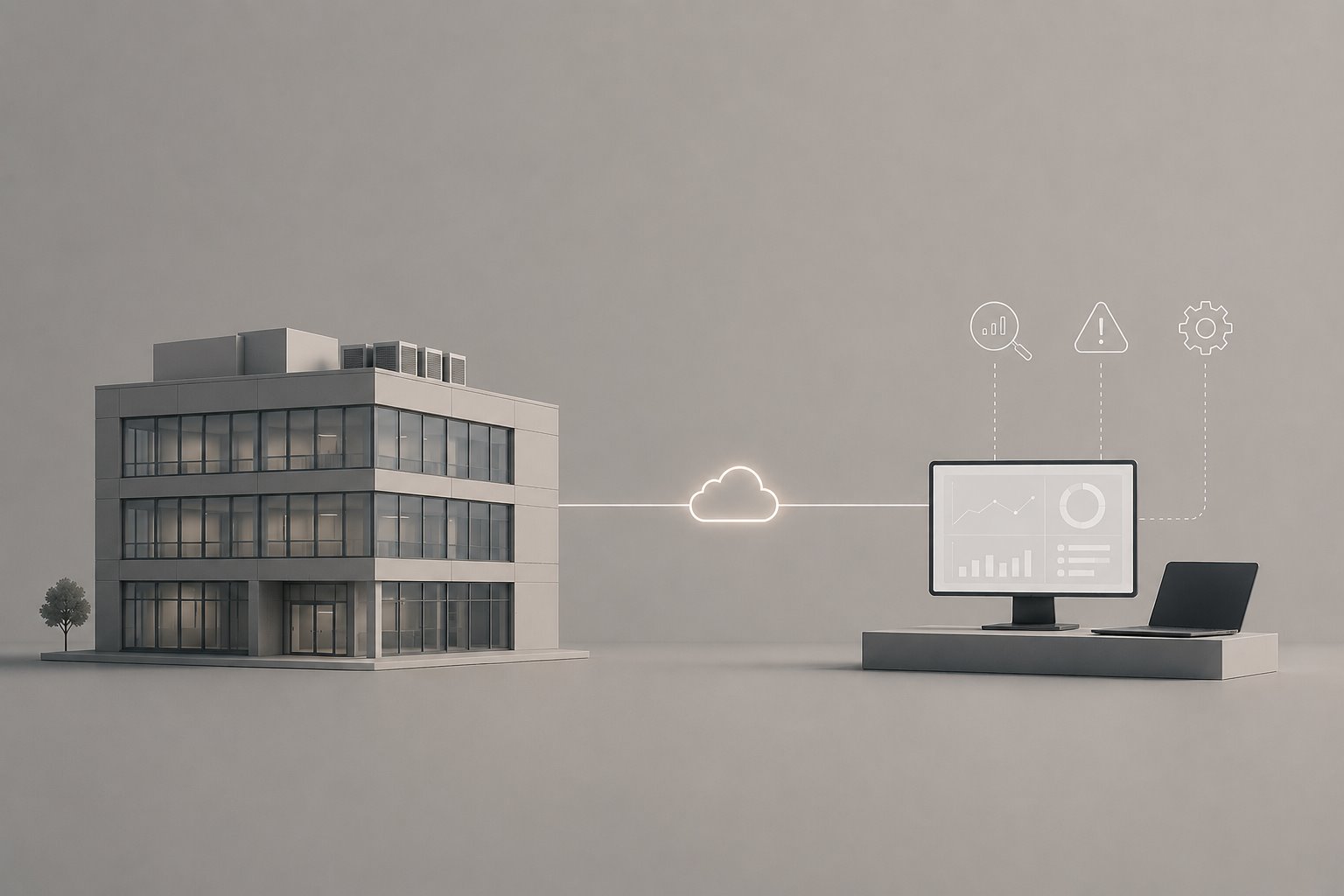
They will stand out for their ability to see how a system operates once it is running. Not once a year during scheduled servicing. Not only after a breakdown. But continuously, through data, historical records, trends, deviations and actual equipment behaviour.
This is where the profession changes. The contractor gradually becomes more than a provider of installation work: they become the system’s engineering operator.
I already see this in practice
For me, this is not a theoretical discussion about the future of the market. We have already started implementing our own approaches to remote monitoring of engineering systems at real sites.
At first, simply gaining access to parameters seems to be the main task: temperatures, faults, operating modes and equipment status. But you soon realise that parameters alone do not provide the answers.
The real value begins when you understand the system’s normal behaviour. What constitutes normal operation. What is a seasonal deviation. What results from actions by the operations team. And what might be the first sign of a developing problem.
When a system shows not just data, but deviations from normal operating logic, the very nature of service changes.
The engineer does not arrive on site to begin searching for the problem. They arrive with a hypothesis about exactly what needs checking.
AI will not replace engineers, but it will change their work
Artificial intelligence in HVAC is often viewed too simplistically, as though it will run the building and make every decision on its own.
I see it differently. AI will be powerful where there is data, historical information, a clear system structure and a professional engineer who understands the physics involved.
It can identify patterns that people do not have time to notice. Compare operating modes. Track recurring deviations. Highlight where a system is not working as it should. Develop hypotheses to test.
But responsibility for decisions will still rest with people. With those who understand not just the graph on the screen, but also the compressor, airflow, hydraulics, controls, tenants and the real working life of the building.
What owners will buy
Under the new model, owners will buy more than design, installation and a warranty. They will buy long-term confidence that the engineering system has not been left to look after itself.
They will want to know who monitors the building’s operation once it is in use. Who analyses its operating modes. Who notices deviations. Who can explain why energy consumption has risen. Who will help change the control algorithms when the use of the spaces changes.
This is no longer service in the traditional sense. It is ongoing engineering support for an asset.
- monitoring system operation
- energy consumption analysis
- identifying hidden losses
- monitoring deviations
- preparing for upgrades
- supporting the operations team with complex decisions
The contractor’s new role
I believe the word ‘installer’ will gradually become too narrow for this market.
An engineering partner will take its place. A company that does not disappear once the acceptance certificates are signed. One that knows the building’s history, sees how it behaves, understands the system logic and helps the building remain efficient.
Such a contractor is responsible for more than ensuring the equipment is installed. They are responsible for ensuring the system continues to fulfil its purpose once it is running.
Key takeaway
In the coming years, more than HVAC equipment will change. The business model will change too.
Installation will remain important, but it will no longer be the sole source of value. Owners will increasingly pay not for installed units, but for control, analytics, service, data, accountability and the system’s ability to operate efficiently in real conditions.
And that, in my view, is the direction the profession is taking.
The HVAC contractor of the future is not simply someone who installed a system well. It is someone who helped the building retain its efficiency once it was in use.
Practical solutions: engineering design; building services installation; solutions for critical infrastructure.
Practical experience
Related articles